PRP Hair Treatment for Hair Loss and Thinning Hair loss and thinning are common concerns affecting millions of people worldwide. Whether caused by genetics, hormonal changes, aging, or environmental factors, hair thinning can significantly impact self-esteem and confidence. Among the various treatment options available, PRP hair restoration has emerged as a promising, minimally invasive solution …
PRP Hair Treatment for Hair Loss and Thinning
Hair loss and thinning are common concerns affecting millions of people worldwide. Whether caused by genetics, hormonal changes, aging, or environmental factors, hair thinning can significantly impact self-esteem and confidence. Among the various treatment options available, PRP hair restoration has emerged as a promising, minimally invasive solution that harnesses the body’s natural healing abilities to stimulate hair growth. This article explores the science, benefits, procedure, and effectiveness of PRP hair treatment for hair loss and thinning.
What is PRP Hair Restoration?
PRP stands for Platelet-Rich Plasma, a concentration of platelets derived from the patient’s own blood. Platelets are a component of blood that contains growth factors and proteins essential for tissue repair and regeneration. In PRP hair restoration, a small amount of blood is drawn from the patient and then processed using a centrifuge to isolate the platelet-rich plasma. This plasma is then injected into the scalp in areas experiencing hair thinning or loss.
The growth factors present in PRP are believed to stimulate the hair follicles, encouraging them to enter the growth phase (anagen) and enhancing their size and thickness. Because PRP uses the patient’s own blood, it is considered a safe and natural treatment with minimal risk of allergic reactions or complications.
How Does PRP Work for Hair Loss and Thinning?
Hair follicles go through a natural cycle of growth, rest, and shedding. In conditions like androgenetic alopecia (male or female pattern baldness), this cycle is disrupted, causing hair follicles to shrink and produce thinner, shorter hairs until they eventually stop producing hair altogether.
PRP hair restoration works by delivering a high concentration of growth factors directly into the scalp. These growth factors include platelet-derived growth factor (PDGF), transforming growth factor (TGF), vascular endothelial growth factor (VEGF), and epidermal growth factor (EGF). They promote:
- Increased blood supply to hair follicles, improving oxygen and nutrient delivery.
- Activation of stem cells in the hair follicle bulge area to initiate new hair growth.
- Reduction in inflammation around the follicles, creating a healthier scalp environment.
- Stimulation of collagen production, which strengthens the scalp tissue and supports hair growth.
By enhancing these biological processes, PRP helps reverse the miniaturization of hair follicles and supports thicker, stronger hair.
Who is a Good Candidate for PRP Hair Treatment?
PRP hair restoration is most effective for individuals experiencing early to moderate hair thinning or hair loss. Ideal candidates include those with:
- Androgenetic alopecia (male or female pattern hair loss).
- Diffuse thinning due to stress, hormonal changes, or nutritional deficiencies.
- Hair loss caused by trauma or scalp conditions.
- Patients looking for a natural, non-surgical approach to improve hair density.
However, PRP may be less effective for individuals with extensive baldness or long-term hair follicle damage. A consultation with a qualified specialist can help determine if PRP is suitable based on the individual’s condition and expectations.
The PRP Hair Treatment Procedure
The PRP hair restoration procedure is straightforward and typically performed in a clinic setting. It involves the following steps:
- Blood Collection: A small amount of blood (usually 10-20 ml) is drawn from the patient’s arm.
- Processing: The blood is placed in a centrifuge, which spins it at high speed to separate the platelet-rich plasma from other blood components.
- Scalp Preparation: The scalp is cleansed, and a topical anesthetic may be applied to minimize discomfort during injections.
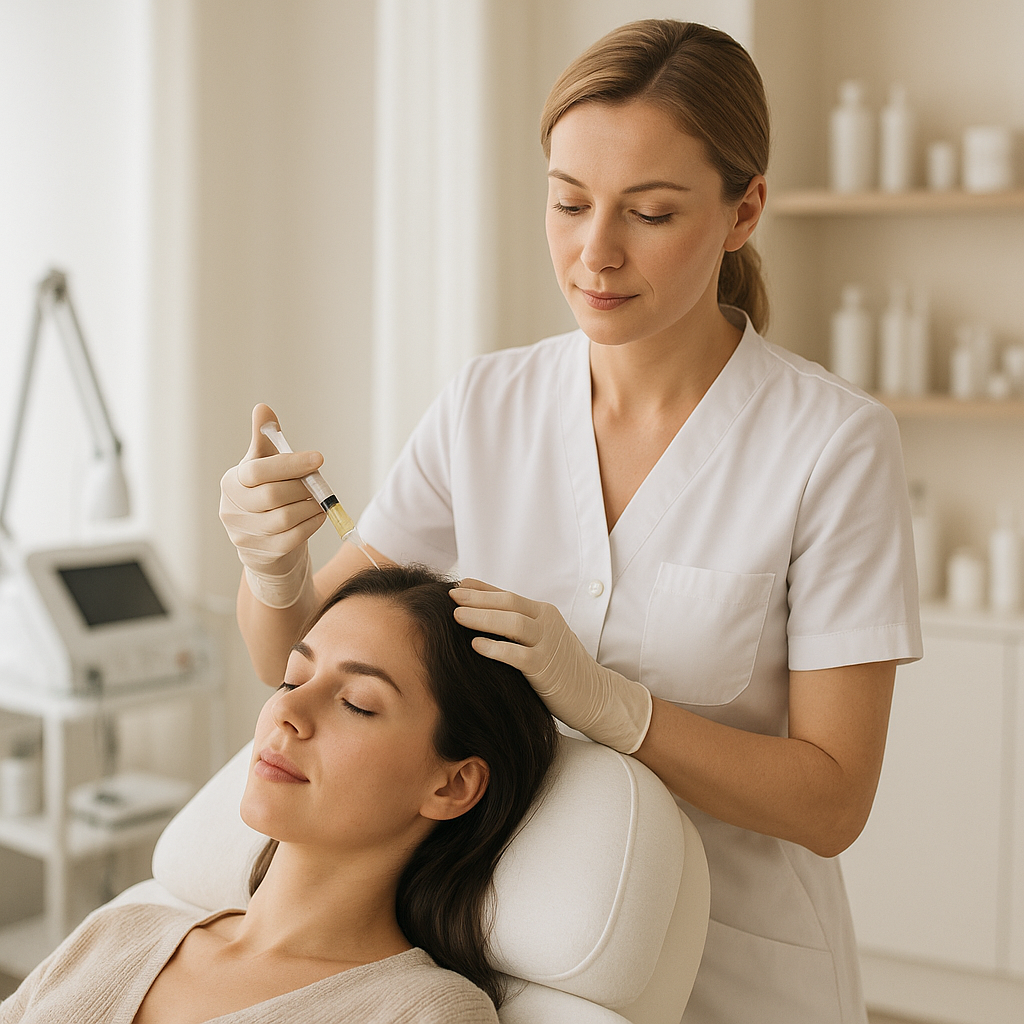
- PRP Injection: Using a fine needle, the PRP is injected into the areas of thinning or hair loss on the scalp. Multiple injections are made to cover the affected zones thoroughly.
- Post-Treatment Care: Patients are advised to avoid washing their hair for at least 24 hours and to follow any other specific aftercare instructions provided by the clinic.
The entire procedure usually takes about 30 to 60 minutes. Most patients experience minimal pain, swelling, or irritation.
Benefits of PRP Hair Restoration
PRP hair treatment offers several advantages compared to other hair loss therapies:
- Natural and Safe: Since the treatment uses the patient’s own blood, there is a low risk of allergic reactions or infections.
- Minimally Invasive: PRP injections are non-surgical, involve no downtime, and have a quick recovery period.
- Stimulates Natural Hair Growth: Instead of just masking hair loss, PRP promotes the regeneration and strengthening of existing hair follicles.
- Can Be Combined with Other Treatments: PRP is often used alongside medications like minoxidil or hair transplant surgery to enhance overall results.
- Improves Scalp Health: The growth factors in PRP help reduce inflammation and improve the scalp environment, which supports healthy hair growth.
What to Expect After PRP Hair Treatment
After the treatment, patients might experience mild redness, swelling, or tenderness at the injection sites, which usually resolves within a few days. Most people can resume normal activities immediately, although strenuous exercise and direct sun exposure should be avoided for a short period.
Visible results typically start to appear after 3 to 6 months as the hair follicles respond to the growth factors and begin producing thicker, fuller hair. Multiple sessions are usually recommended—often 3 to 4 treatments spaced 4 to 6 weeks apart—followed by maintenance treatments every 4 to 6 months to sustain the results.
Effectiveness and Scientific Evidence
Numerous clinical studies support the effectiveness of PRP for hair restoration. Research has shown that PRP can increase hair density, thickness, and follicle count in patients with androgenetic alopecia. For example, a study published in the International Journal of Trichology demonstrated significant improvements in hair count and hair thickness after a series of PRP treatments.
However, results can vary depending on factors such as age, extent of hair loss, underlying health conditions, and adherence to treatment protocols. It is important to have realistic expectations and understand that PRP is not a permanent cure but a regenerative therapy that may need ongoing sessions for optimal maintenance.
Potential Risks and Considerations
While PRP hair restoration is generally safe, some potential risks and side effects include:
- Mild pain or discomfort at injection sites.
- Swelling or redness of the scalp.
- Temporary bruising.
- Rare risk of infection if proper hygiene is not maintained.
Patients with certain medical conditions, such as blood disorders, platelet dysfunction, or active infections, may not be suitable candidates. A thorough medical evaluation should be conducted before starting treatment.
Conclusion
PRP hair restoration is a cutting-edge, natural treatment option for individuals struggling with hair loss and thinning. By utilizing the body’s own growth factors, PRP stimulates hair follicles to grow thicker, healthier hair without surgery or synthetic chemicals. With its safety profile, minimal downtime, and promising results, PRP is becoming an increasingly popular choice for hair restoration.
Those interested in exploring PRP hair treatment should consult a qualified specialist to discuss their specific condition and develop a personalized treatment plan. Early intervention often leads to better outcomes, making it essential to address hair thinning as soon as it is noticed.
Contact By Beauty Clinic Rasa.
Plan direct uw afspraak
Heeft u vragen of wilt u een afspraak inplannen?